
Daikin FIT Hybrid Heat Pump Systems in Massachusetts: How They Work & Who They’re For
Summary: Daikin FIT Hybrid Heat Pumps in Massachusetts
Daikin FIT hybrid heat pump systems combine an inverter-driven air source heat pump with a gas furnace to deliver efficient heating and cooling in Massachusetts’ variable climate. They provide quiet, steady comfort during most of the season, switch to gas heat during extreme cold, and work well for homes with ductwork and limited outdoor space. With eligibility for Mass Save rebates and federal tax credits, they offer a practical, low-risk path to higher efficiency and lower emissions.
If you live in Massachusetts, you already know the problem. We do not get “mild” weather. We get humid summers that beg for quiet, high-performing air conditioners, shoulder-season chaos that demands flexible heating cooling solutions, and winter cold that makes every heating decision feel like a high-stakes bet, even for the most seasoned New Englander striving to save energy and slash utility bills.
That’s why hybrid heat pump systems have been getting so much attention lately. They give you the best parts of a modern air source heat pump—whisper-quiet cooling and variable speed heat pump heat, plus the backup strength of a traditional natural gas furnace when conditions call for it. This marriage of technologies delivers serious energy efficient performance and keeps you comfortable whether it is a mild 45°F afternoon or a bitter 5°F morning in our famously cold climate.
And one of the most popular options in this category is the Daikin FIT hybrid heat pump system, sometimes called a dual-fuel Daikin FIT setup. As part of the broader family of Daikin products AC and heating equipment, the FIT leverages decades of research, ENERGY STAR–rated components, and an intelligent heat pump condenser to optimise performance.
Let’s break down what it is, why it’s a great match for Massachusetts homes, and how to know if it’s the right move for you. We will also touch on incentives such as Mass Save heat pump rebates, federal tax credits, and state pump rebates that can make the investment even more appealing.
Table of Contents
ToggleWhat is a Daikin FIT Hybrid Heat Pump System?
A hybrid heat pump system is a heating and cooling setup that combines:
- A high-efficiency, inverter-driven, split heat pump for most heating and all cooling, operating as a highly efficient air source unit that meets ENERGY STAR guidelines and helps homeowners save energy every hour it runs.
- A gas furnace for backup heat during the coldest stretches (or when it’s cheaper to run thanks to lower natural gas heat prices). This “dual-fuel” pairing ensures you always have reliable heating cooling capability, even when outdoor temps dip well below freezing.
The system automatically switches between the heat pump and furnace based on outdoor temperature, indoor demand, and the control strategy your installer sets up. Advanced thermostats can even factor in utility rates, allowing the equipment to choose the most cost-effective fuel and maximize overall energy efficiency while reducing carbon emissions.
The Daikin FIT is a specific style of inverter-driven (variable speed) heat pump that’s designed to work in tighter spaces while delivering efficient, steady comfort. Its slim heat pump condenser fits where many standard heat pump or traditional air conditioning outdoor units simply cannot, making it a perfect match for dense neighborhoods with limited setbacks.
So when someone says “Daikin FIT hybrid,” they typically mean:
Daikin FIT heat pump + compatible coil + high-efficiency gas furnace + smart air handler + controls configured for dual fuel. This combination forms a rock-solid residential HVAC platform that seamlessly blends electric and natural gas technologies.
Why Daikin FIT is a good fit for Massachusetts homes
It’s built for the way Massachusetts weather actually behaves
Massachusetts is not “cold all winter” in a simple way. It’s 45°F one day, 15°F the next, then back to 33°F and raining.
Throw in Nor’easters, lake-effect snow, and damp spring thaws, and you have a true cold climate roller coaster.
That matters because heat pumps are at their best when they can run steadily and efficiently during milder and moderately cold temperatures, which make up a huge chunk of our season. When properly selected and paired with good insulation air sealing upgrades, often discovered during a Mass Save energy assessment, heat pumps can provide comfortable, low-cost heat down to surprisingly low temperatures.
A Daikin FIT hybrid system can:
- Run the heat pump during those long stretches of “normal cold,” delivering efficient air source heat and lowering operating costs.
- Switch to the furnace when the cold is extreme, the house needs a fast recovery, or natural gas rates beat electricity rates on a given day.
For a lot of homeowners, that blend is the sweet spot, marrying efficiency with peace of mind.
Variable-speed comfort means fewer hot/cold swings
Older systems feel like a light switch: full blast, then off, then full blast again. That cycling wastes energy and erodes comfort.
Daikin FIT is inverter-driven, which means it can ramp output up and down to match the home’s needs more smoothly. The result is typically:
- More even temperatures across every zip code in the Commonwealth, from Worcester to Cape Cod
- Better humidity control in summer, so your air conditioning feels crisper without overcooling
- Quieter operation that your family and your neighbors will appreciate
- Less stop/start wear, which can extend equipment life and reduce maintenance costs
It’s often a practical option for homes with limited outdoor space
Massachusetts homes are famous for tight side yards, short setbacks, and awkward foundations. Historic districts in Cambridge or narrow lots in Somerville can make standard condensers a challenge.
Daikin FIT systems are commonly chosen because:
- They’re designed with a low-profile outdoor unit that hugs the house and maintains curb appeal.
- They can be easier to place than bulkier traditional condensers, freeing up room for decks, gardens, and play areas.
- They’re a clean upgrade path for many ducted heating cooling systems, often reusing existing air handler and ductwork with strategic modifications.
If you’ve ever looked at your house and thought, “Where would an outdoor unit even go?”, this is one reason FIT gets recommended.
Hybrid solves the “I want a heat pump, but I’m not ready to ditch gas” dilemma
A lot of Massachusetts homeowners want heat pump efficiency and AC performance, but still like the comfort (or confidence) of natural gas heat on bitter cold nights.
Hybrid gives you:
- Heat pump efficiency most of the season, dramatically reducing electric bills and helping you qualify for energy star-related pump rebates.
- Furnace backup when you want it, ensuring reliable heat pump heat capacity on the coldest January mornings.
- A transition path toward more electrification later (if that’s your plan) without the cost of an immediate full electric overhaul.
Who should consider a Daikin FIT hybrid system?
A Daikin FIT hybrid setup tends to make the most sense if you check a few of these boxes:
You currently have ductwork and want central heating and cooling
If your home already has ducts and you want a clean, central system upgrade, this is a strong candidate. A professional heat pump installation crew can evaluate existing duct static pressure and recommend any necessary air sealing or insulation improvements.
You have natural gas and want flexibility
Hybrid is ideal when natural gas is available and you want the system to choose the best heat source automatically. With smart controls you can let utility rates or outdoor temperature dictate whether the air source heat pump or gas furnace delivers the heat.
You’re sensitive to comfort and noise
If you care about steady temps, quieter operation, and better humidity control, inverter-driven equipment is a noticeable upgrade. Pairing the Daikin FIT with an ECM air handler and a properly sized return helps keep sound levels low.
You’re trying to improve efficiency without taking risks
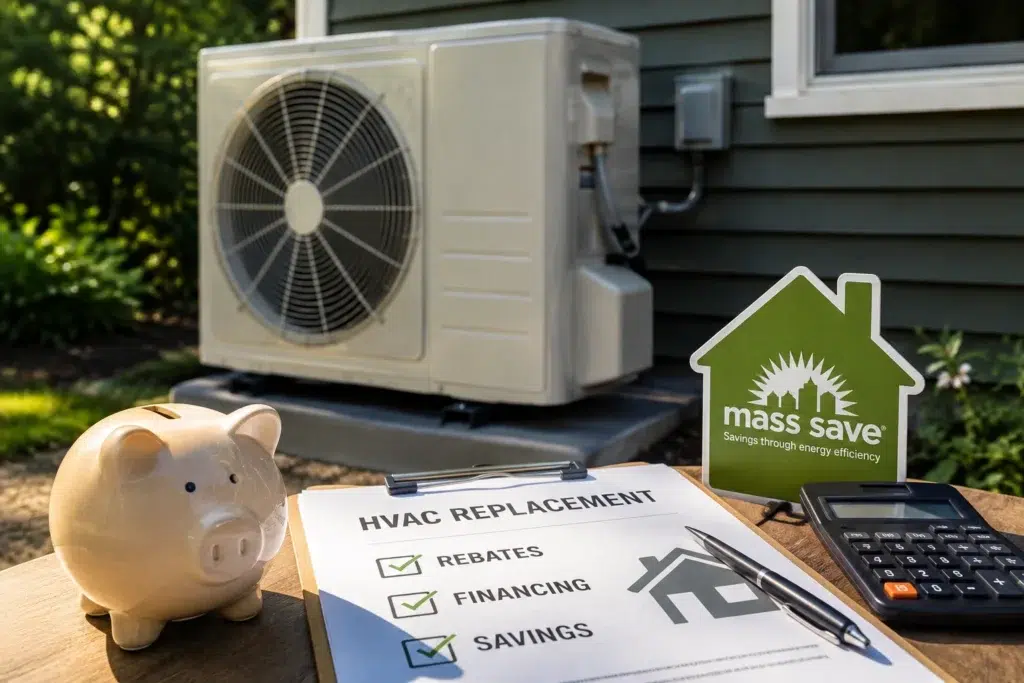
Some homeowners love going fully electric. Others want a more conservative upgrade that still delivers big improvements. Hybrid is often the “no-regrets” middle ground, offering measurable energy efficiency gains and eligibility for Mass Save and federal tax credits without sacrificing performance.
The big question: When does it switch from heat pump to furnace?
This is where good design matters, and where you will appreciate working with an experienced install heat pumps contractor.
In a hybrid system, the “switch point” can be set based on:
- Outdoor temperature (for example, switching to natural gas heat below 15°F)
- Efficiency curves of the heat pump, which show how much electric energy the system draws at each degree (Mass Save requires natural gas and oil switchovers at 30 degrees or less)
- Fuel costs (electric vs gas), taking into account current utility rates, available pump rebates, or potential federal tax incentives
- Comfort preferences (steady vs fast recovery), since some families prioritize ultra-quiet operation while others want rapid warmth
In Massachusetts, the best switch strategy is not one-size-fits-all. The right answer depends on:
- Insulation and air sealing levels, which affect heat loss
- Duct design and leakage, including whether your air handler has the right static pressure
- Home size and layout, plus the zip code location that dictates typical cold climate conditions
- How you heat today, what you pay per unit of energy, and whether you plan to install pump water heaters or upgrade your hot water heater in the future
A high-quality install includes a plan for that changeover logic so you’re not guessing, and it should be backed by detailed load calculations and, ideally, a Mass Save energy assessment.
Common myths about hybrid heat pumps in Massachusetts
Myth 1: “A heat pump won’t work in real winter”
Modern heat pumps work very well in Massachusetts, especially in the shoulder seasons and most winter days. Hybrid just adds backup power for extreme conditions and peace of mind. Many Daikin products are specifically rated for cold climate performance and meet or exceed ENERGY STAR criteria.
Myth 2: “Hybrid is a compromise”
It’s more accurate to call it a strategy. For many homes, it’s the most practical way to get modern energy efficient comfort without forcing the house (or budget) into a full electrification leap immediately. It lets you take advantage of source heat pump technology while retaining the familiarity of a furnace.
Myth 3: “Any installer can set this up the same way”
Hybrid systems live or die on design details: equipment pairing, airflow, duct static pressure, thermostat/control setup, and commissioning. The difference between “fine” and “amazing” is usually the installer, not the brand name. Make sure your contractor is experienced with Daikin products and has a track record of successful heat pump installation across diverse Massachusetts zip codes.
What to ask your contractor before choosing Daikin FIT hybrid
Here are the questions that separate a real plan from a generic quote:
- Will you size this based on the house (not the old equipment)? A true residential HVAC professional will run a Manual J load calculation to right-size the split heat pump, air handler, and gas furnace.
- How will you set the heat pump-to-furnace changeover point, and why? The explanation should reference energy efficiency, local utility rates, and expected savings on heating cooling bills.
- Are you checking duct static pressure and airflow? Proper airflow protects the variable speed compressor and ensures the heat pumps heat effectively.
- What controls/thermostat will manage dual fuel logic? Some daikin products include integrated communicating thermostats that can maximise energy star performance and even coordinate with smart water heaters or pump water heaters for whole-home optimisation.
- What will my system run on most days in winter, and what should I expect for comfort? You deserve clear numbers on projected kWh, therms, heat pump water usage if applicable, and potential savings from pump rebates or federal tax credits.
If the answers are vague, you’re not getting a tailored design yet.
The bottom line: why Daikin FIT hybrid is a smart Massachusetts choice
If you want:
- High-efficiency heating and strong AC performance that beats a standard heat pump
- Smoother comfort and quieter operation thanks to a variable speed inverter compressor
- A ducted system that fits tight outdoor spaces and preserves your home’s curb appeal
- Backup heat for deep winter that seamlessly blends air source and natural gas heat
- Flexibility as energy prices and Mass Save heat pump rebates evolve, helping you save energy year after year
…a Daikin FIT hybrid heat pump system is absolutely worth a serious look.
Frequently Asked Questions About Daikin FIT Hybrid Heat Pump Systems in Massachusetts
Do Daikin FIT hybrid heat pumps work in Massachusetts winters?
Yes. Daikin FIT hybrid systems are designed specifically for cold-climate performance. The heat pump handles most heating needs during mild and moderately cold weather, while the gas furnace automatically takes over during extreme cold or high-demand situations. This ensures reliable comfort even during sub-zero Massachusetts cold snaps.
When does a Daikin FIT hybrid system switch from heat pump to gas heat?
The changeover point depends on system design and homeowner preferences. In Massachusetts, many systems switch somewhere between 10°F and 20°F, but the exact setting can also factor in insulation levels, duct design, and current electric versus gas utility rates. A properly designed system sets this intentionally, not by guesswork.
Is a Daikin FIT hybrid system cheaper to run than a traditional furnace?
For most Massachusetts homes, yes. The heat pump operates during the majority of the heating season when it is more efficient, reducing overall fuel consumption. The gas furnace runs only when it makes sense for comfort or cost. Over time, many homeowners see lower combined heating and cooling costs compared to running a furnace alone.
Can a Daikin FIT hybrid system qualify for Mass Save rebates?
In many cases, yes. Hybrid heat pump systems may qualify for Mass Save heat pump rebates, depending on system configuration, efficiency ratings, and fuel type being replaced. Federal tax credits may also apply. Eligibility rules change, so it’s important to review incentives during system design, not after installation.
Is Daikin FIT a good option if my home already has ductwork?
Absolutely. Daikin FIT hybrid systems are well suited for homes with existing ductwork. A qualified installer should still evaluate duct condition, airflow, and static pressure to ensure the system operates efficiently and quietly, but many Massachusetts homes are excellent candidates.
How loud is a Daikin FIT hybrid heat pump system?
Daikin FIT systems are known for quiet operation. The inverter-driven compressor allows the system to run at lower speeds most of the time, which significantly reduces noise compared to traditional single-stage systems. This is especially important in dense Massachusetts neighborhoods and homes with outdoor units close to property lines.
Is a hybrid heat pump a good choice if I am not ready to go fully electric?
Yes. Hybrid systems are often the best choice for homeowners who want improved efficiency and lower emissions without immediately eliminating natural gas. They provide flexibility today and a clear transition path toward more electrification in the future if energy prices or incentives change.
How long does a Daikin FIT hybrid system typically last?
With proper installation and maintenance, a Daikin FIT hybrid heat pump system can last 15–20 years. Inverter-driven equipment often experiences less wear than traditional systems because it avoids constant on-off cycling, which can help extend equipment life.
Want a Daikin FIT hybrid quote that’s actually designed for your home?
At Endless Energy, we design hybrid heat pump systems for Massachusetts homes every day. We’ll look at your layout, ductwork, comfort goals, hot water needs, and fuel options, then recommend the setup that makes the most sense for your house. Our in-house technicians handle every pump installation, insulation air sealing upgrade, and water heater replacement. No subcontractors, just Endless Care.
Self-schedule your Daikin heat pump consultation with Endless Energy or call us at 508-794-8590 to get a plan you can feel confident about, maximize pump rebates, and start experiencing true energy efficiency today.