
Newton Homes: Choosing Ducted vs. Ductless Heat Pumps in 2026
If you live in Newton and you’re thinking about replacing your heating system—or maybe planning a renovation or addition—you’ve probably heard two terms over and over: ducted and ductless heat pumps.
On the surface, the difference seems simple. One uses ducts. One doesn’t. But the decision goes deeper than that, especially in older Massachusetts homes where space constraints, layout, insulation quality, and heating load vary wildly from house to house.
So let’s walk through this together like you’re sitting across from one of our Comfort Advisors in Newton Centre. We’ll cover how each system works, what matters most for Massachusetts winters, where ducted shines, where ductless shines, and how Newton homeowners can choose confidently.
Why This Choice Matters in Newton
Unlike other regions, Newton homes bring complexity. Many homes are historic with tight mechanical chases and limited attic space. You’ve got cold winters and humid summers. Utility incentives and rebates shift yearly. Homeowners expect comfort and quiet operation. And space and layout vary dramatically from neighborhood to neighborhood.
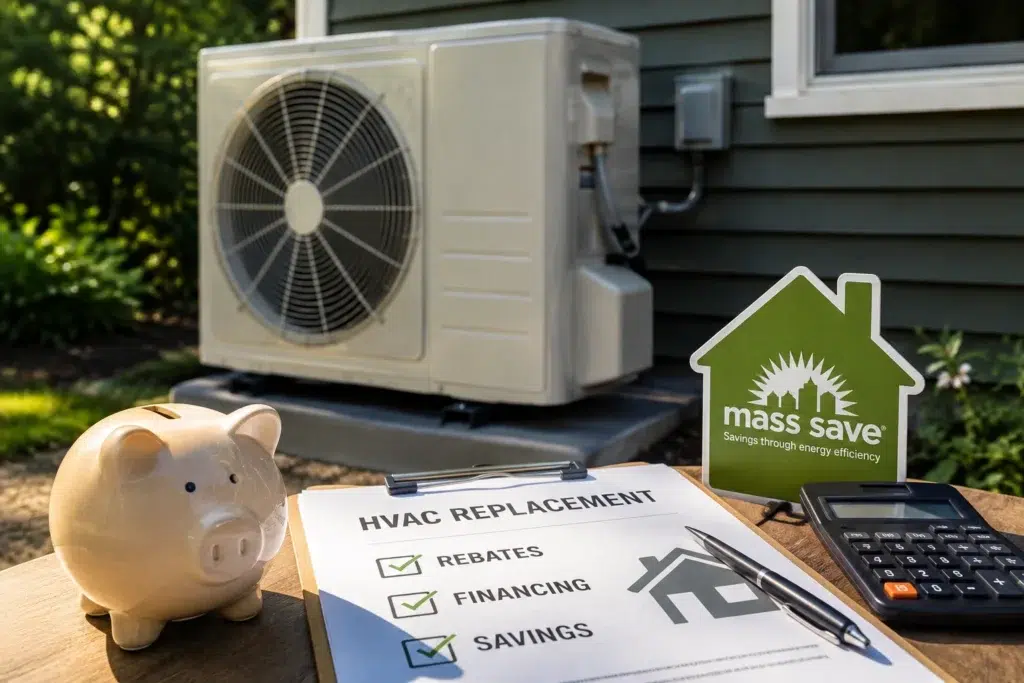
With heat pumps becoming more common across Massachusetts—thanks to Mass Save incentives and fuel price volatility—choosing the right configuration protects both comfort and finances long-term.
Ducted vs. Ductless: What’s the Real Difference?
Let’s make this simple.
Ducted Heat Pump (Air Handler + Ducts) You’ve got a centralized indoor unit that pushes conditioned air through ducts and vents. ‘Set it and forget it’ comfort across most of the home.
Ductless Heat Pump (Mini-Split) No, you don’t need ductwork for heat pumps! Instead of ducts, you have indoor “heads” mounted on walls or ceilings that heat and cool individual rooms or zones.
Both use the same basic refrigeration cycle. Both can heat and cool year-round. But how they deliver air is what matters for comfort, efficiency, and total cost.
The Pros & Cons Homeowners Actually Feel
Yes, efficiency ratings and specs matter, but homeowners feel comfort first. Here’s what life looks like with each system in a Newton home.
Ducted Heat Pump Benefits
It feels like traditional central heating. You get no visible indoor units—clean walls and ceilings. One thermostat is easier for guests or kids. And it’s great when ducts already exist and are in good shape.
Where Ducted Can Disappoint
Air leakage in old ducts wastes energy, especially in attics. Dust and allergens can build up inside ductwork. If rooms aren’t balanced properly, you get hot and cold spots. And retrofits in homes without ducts get expensive fast.
Ductless Heat Pump Benefits
True zoning control means you can heat bedrooms cooler and living areas warmer. No duct losses mean higher efficiency and lower operating costs. Installation is quick—ideal for old homes without ducts. And they’re perfect for tricky spaces like attics, additions, sunrooms, and basements.
Where Ductless Can Disappoint
The indoor units are visible on your walls, which some homeowners don’t love. When you need 6+ zones, equipment cost rises. And wall placement matters for airflow—you can’t just stick them anywhere.
Which System Works Better in Newton?
Here’s where experience matters.
We’ve worked on hundreds of homes across Newton—from Newton Corner two-family conversions to Chestnut Hill colonials and West Newton Victorians. Each layout and lifestyle is different.
We usually recommend:
Choose Ducted If… You already have ductwork in good condition. You prefer invisible indoor equipment. You want quiet, whole-home comfort with one thermostat. Or your home layout is open, or the bedroom level shares a single zone.
Choose Ductless If… Your home has no existing ductwork. You want precise control bedroom-by-bedroom. You’re finishing attic space or adding an addition. You want to reduce reliance on oil or propane. Or comfort complaints include hot second floors or cold basements.
Mixed Ducted & Ductless Heat Pump Systems: The Secret Best Option for Newton Homes
Most people think they have to choose either a ducted or ductless heat pump design for your home. You don’t.
In fact, the highest satisfaction ratings we see in Newton come from blended systems: a ducted heat pump for main living and bedroom zones, ductless units for difficult spaces or bonus rooms, and one outdoor unit serving both types of indoor equipment.
Mixed heat pump setups solve major challenges like limited space for ducts, huge heating loads in older structures, and uneven room temperatures. Best of all, they maximize Mass Save incentives and reduce fuel usage dramatically over time.
How Cold Does It Get Before a Heat Pump Struggles?
This used to be a concern, but today’s cold-climate heat pumps can heat reliably well below zero temps. Many real-world Newton customers see consistent performance through winter without supplemental heat.
That said, here’s the practical truth: a heat pump sized correctly will heat in 99% of winter conditions. Electric resistance backup or a furnace helps during extreme cold snaps. And ducted systems must have ducts in good condition to reach full efficiency.
This is why a Manual J heat load calculation—not rules of thumb—is critical.
Installation Cost Breakdown (What to Expect in Newton)
Every home is different, but most Newton installations fall into these ranges:
| System Type | Typical Installation Cost* |
|---|---|
| Ductless single zone | $$$ |
| Ductless multi-zone (3–5 zones) | $$$$ |
| Ducted air handler using existing ducts | $$$–$$$$ |
| New ductwork + ducted heat pump | $$$$$ |
*Cost depends on layout, insulation, electrical, duct condition, and heat load.
The highest costs tend to be when ductwork must be added to an older home—think tight spaces or plaster ceilings. Ductless avoids that.
Energy Bills: Which System Saves More?
Generally, ductless uses less energy because you avoid duct losses. Ducted can be very efficient when ducts are sealed and insulated but, especially if you are doing a ducted heat pump swap out, you may have leaky ductwork (Tip: Aeroseal is a great option to mitigate problems with leaky ductwork). And zoning with ductless reduces waste in unused areas.
But let’s be honest: comfort matters just as much as bills. A properly designed system pays for itself faster.
Which Should YOU Choose?
Here’s a quick decision guide Newton homeowners can use:
Already have ducts? Start with ducted.
No ducts and don’t want major construction? Go ductless.
Need to heat and cool multiple floors differently? Hybrid.
Want precise control and highest efficiency? Ductless.
Want a clean aesthetic with no wall units? Ducted.
Renovating or expanding? Ductless or hybrid.
Final Thoughts for Newton Homeowners
Choosing between ducted and ductless isn’t just a mechanical decision. It’s lifestyle-based.
How do you use your spaces? What do winter comfort and quiet mean to you? How long do you plan to stay in your Newton home? Is aesthetics as important as efficiency? Are attic or basement retrofits planned?
A great heat pump installation begins with great design. When properly sized and engineered, both ducted and ductless systems provide outstanding comfort through New England winters.
If you want help comparing layout options for your home—or want to see sample installations nearby, please reach out and schedule a free heating consultation with Endless Energy’s expert designers (you can now self-schedule online). We design, size, and install ducted, ductless, and hybrid heat pump systems throughout Newton and nearby towns, and we’d be happy to walk you through what will work best in your home.
 Frequently Asked Questions About Ducted vs. Ductless Heat Pumps in Newton, MA
Do heat pumps really work during Massachusetts winters?
Yes. Modern cold-climate heat pumps are engineered to perform reliably through freezing temperatures, even below zero. When the system is sized correctly using a Manual J heat load calculation and properly weatherized, most Newton homeowners see consistent comfort all winter long without relying heavily on backup heat.
Which is more efficient—ducted or ductless heat pumps?
In many Newton homes, ductless mini-splits are more efficient because they avoid heat loss through ducts and allow zoned heating and cooling. That means you’re not conditioning unused rooms, which can help lower monthly energy costs.
Are ductless heat pumps more expensive to install?
It depends on your home and how many rooms or zones you want to condition. Multi-zone ductless systems can cost more in equipment, but they also avoid the construction required to add new ductwork in older homes—something that’s common in Newton renovations.
Can ducted and ductless systems be combined?
Yes. Mixed ducted and ductless heat pump systems are very popular in Newton. These systems, often using the same outdoor condenser, use ducted equipment for main floors and bedrooms, while ductless units serve additions, finished basements, attics, or individual comfort-problem rooms. Mixed systems deliver balanced comfort and efficiency while keeping installation costs sensible.
Are heat pump rebates available in Newton?
Yes. Many Newton homeowners qualify for Mass Save heat pump rebates, and the incentives can be substantial when you install a high-efficiency cold-climate system. Rebate amounts depend on the system design (in 2026 the Mass Save whole home heat pump rebate goes up to $8,500) and efficiency ratings, and they change periodically—so checking before installation is smart.