
If you rely on a ductless mini-split to keep your home comfortable during the warmer months, you know how much of a difference it makes. Like any HVAC equipment, however, mini-split systems can run into problems that leave you sweating instead of staying cool.
When your mini-split AC is not cooling properly, the cause could be something simple you can address yourself, or it could be a more serious issue needing a trained technician. Explore the most common culprits, practical troubleshooting steps, and clear signs it’s time to call in a professional. If you’re in Massachusetts, Endless Energy is here to help with fast, reliable mini-split repair.
How a Mini-Split Cooling System Works
Ductless mini-splits consist of two main components. The indoor air handler distributes conditioned air throughout your space, while the outdoor compressor unit does the heat exchange.
The system uses refrigerant to absorb heat from your indoor air and transfer it outside. For this process to work, the system needs proper airflow through both units and the right refrigerant charge. When either of those is off, your air conditioning performance suffers.
7 Common Reasons Your Mini-Split Isn’t Cooling
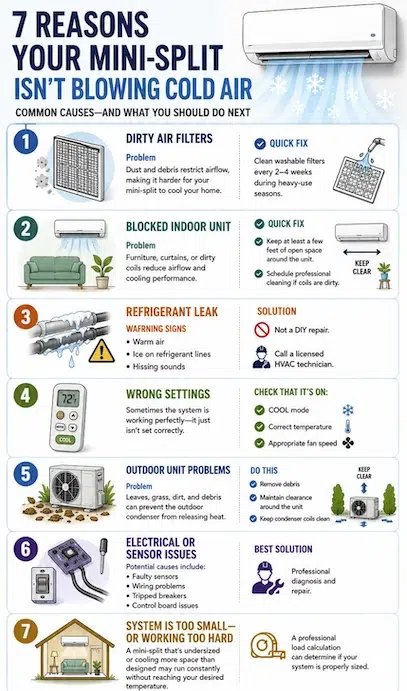
There is no single answer to why a mini-split AC isn’t cooling. Whether you’re dealing with a ductless mini-split that’s barely taking the edge off the heat or one that’s running constantly, one of these seven problems is likely to blame.
Dirty air filters
This is one of the most common reasons a ductless AC is not cooling effectively. It’s also one of the easiest to fix. When filters get clogged with dust and debris, airflow through the indoor unit is restricted, and the system can’t move enough air to cool your space properly.
Most mini-split filters should be cleaned every two to four weeks during heavy-use seasons. Carefully remove the filters from the indoor unit, rinse them with lukewarm water, let them dry completely, and reinstall them.
Blocked or dirty indoor unit
Even with clean filters, the coils and blower wheel inside your indoor unit can accumulate a layer of dust and grime over time. Heat transfer efficiency drops, and airflow is reduced, so your mini split isn’t blowing cold air the way it should.
Furniture pushed too close, curtains hanging in front, or items stored directly below it can all interfere with proper airflow, too. Give the unit a few feet of clearance on all sides.
Refrigerant leak
When refrigerant levels drop due to a leak, the system loses its ability to transfer heat effectively, and your mini split ends up blowing warm air.
Signs of a refrigerant leak include warm air coming from the vents, ice forming on the refrigerant lines, and a faint hissing sound near the connections. This is not a DIY repair. Adding refrigerant requires certification, and the leak itself needs to be sealed before any recharge will hold.
Incorrect thermostat or remote settings
Take a second look at how the system is configured. A mini-split AC set to fan-only mode will circulate air without any cooling, which can be mistaken for a malfunction.
The same goes for a temperature setting that’s too high or programming that’s incorrect. It happens more often than you’d think, especially after a power outage resets settings.
Outdoor unit problems
When debris builds up around the outdoor compressor unit, or when the condenser coils get coated in grime, the system can’t shed heat efficiently. In some cases, the compressor can overheat entirely and shut down as a safety measure.
Walk around the outdoor unit and clear away any vegetation, debris, or objects within two feet of it. If the coils look visibly dirty, that’s a job for a professional technician who can clean them safely without damaging the fins.
Electrical or sensor issues
If a temperature sensor is reading the room inaccurately, the system may not activate cooling when it should. Wiring problems or a failing control board can cause erratic behavior or prevent the system from entering cooling mode at all.
These mini-split AC problems generally aren’t visible to the naked eye and require professional diagnostic equipment to identify.
System is undersized or overworked
A ductless mini-split that’s undersized for the space will run continuously without ever reaching the set temperature, especially during extreme heat. Poor insulation, air leaks around windows and doors, and high internal heat loads can all compound the problem.
An HVAC professional can assess whether your ductless mini-split is appropriately matched to your space and what, if anything, can be done to help it keep up.
Quick Troubleshooting Steps to Try First
Before you call for service, it’s worth working through these basic checks. Many mini-split troubleshooting calls turn out to be something the homeowner could have handled at home.
- Clean the air filter and allow it to dry fully before reinstalling.
- Check remote and thermostat settings.
- Power the system off at the breaker, wait 30 seconds, then turn it back on to reset it.
- Ensure vents and airflow around the indoor unit are unobstructed.
- Inspect your electrical panel to confirm the breaker hasn’t tripped.
- Clear any leaves, grass, or debris that have accumulated around the outdoor unit.
When to Call a Mini-Split Repair Professional
Knowing when to stop troubleshooting mini-split AC problems and make the call can save you from a minor issue turning into a major repair. Reach out to an HVAC professional if:
- Your mini-split is blowing warm air.
- You suspect a refrigerant leak.
- Ice is forming on the coils.
- The system is making strange noises.
- The unit repeatedly shuts off shortly after starting up.
- Cooling performance continues to decline.
Prompt attention to these warning signs matters. Endless Energy offers financing options to help make mini-split repairs more manageable when you need them.
Preventing Mini-Split Cooling Problems
The best mini-split repair is the one you never need. To keep your system running at peak performance:
- Schedule annual HVAC maintenance.
- Clean air filters regularly.
- Keep indoor and outdoor units clear.
- Watch for early signs of trouble.
Endless Energy offers maintenance plans designed to catch potential issues before they become breakdowns. Check out current offers that may apply.
Mini-Split Repair in Massachusetts
When your ductless mini-split isn’t cooling, Endless Energy is ready to help with professional repair and maintenance throughout Massachusetts. Our experienced technicians know these systems inside and out. We offer fast diagnostics, honest assessments, and quality repairs using top-brand parts.
Whether it’s a refrigerant leak, a sensor issue, or something more involved, our team will identify the problem and get your system back to cooling your home the way it should. Contact us to schedule your mini-split repair service today.
Mini-Split Cooling Frequently Asked Questions
Why is my mini-split blowing warm air?
Warm airflow from a ductless mini-split could indicate low refrigerant, a dirty air filter, or incorrect mode settings. If the system is in cooling mode and the filter is clean, a refrigerant issue is likely.
How do I reset my mini-split system?
Turn the system off using the remote, then switch off the breaker at your electrical panel. Wait about 30 seconds before turning the breaker back on, then restart the unit with your remote.
How long do mini-split systems last?
With proper maintenance, a quality mini-split system can last 15 to 20 years. Neglecting maintenance or ignoring early signs of trouble can significantly shorten that lifespan.
Should I repair or replace my mini-split?
If your system is under 10 years old and the repair cost is reasonable, repair is usually the better choice. For older systems with significant issues, it may be worth exploring replacement, especially given the rebates available in Massachusetts.
What maintenance does a mini-split require?
The core maintenance tasks for a mini-split include regular filter cleanings, annual professional tune-ups, and keeping both indoor and outdoor units clear of obstructions. A professional service call once a year can catch small issues before they become big problems.