
If it seems as though some rooms are consistently warmer despite your AC running on full blast, there may be other factors causing uneven cooling in your home. An AC not cooling every room may have underlying problems limiting its cooling potential, such as uneven clogged air filters, poor insulation, or incorrect equipment sizing. Learn why one room is warmer than others and how maintenance and professional upgrades can help.
Why Uneven Cooling Happens in Homes – Summer 2026
Uneven cooling happens in homes when your HVAC system is unable to properly distribute conditioned air or if rooms accumulate heat more quickly than the system can remove it. Proper airflow largely relies on your home’s layout and airflow physics, and hot and cold air move in different ways, whether in your home or as it transfers between inside and outdoors.
7 Common Reasons One Room Stays Hot
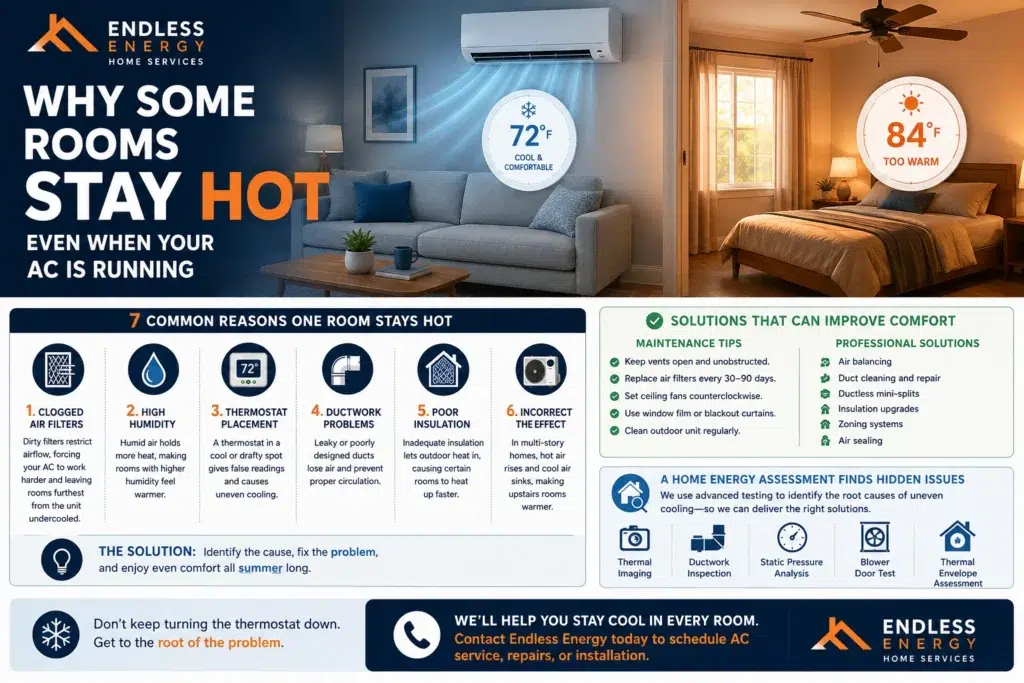
There are several common reasons why your AC is running but one room is still hot when the rest of your house is cool and comfortable. Here are the top seven:
1. Clogged air filters
Air filters accumulate dust and debris, and they can become clogged if not replaced every 30 to 90 days. Clogged air filters restrict the total volume of air that your air conditioning can circulate throughout the system and your home. This forces the system to work harder and prevents it from pushing air through the longest ducts, so rooms furthest from the AC unit receive little to no air conditioning.
2. High humidity
High humidity means that the air in your home is heavier and can hold significantly more heat compared to dry air. Rooms with naturally higher humidity can feel hotter than areas with dry air.
3. Thermostat placement
The thermostat usually controls the entire cooling system, and placement influences temperature readings. Poor placement will misrepresent conditions throughout your home. If your thermostat is located in a drafty, shaded, or otherwise cooler area in your home, it will start and stop the AC according to its immediate temperature, leading to inconsistent cooling throughout your home.
4. Ductwork problems
Ductwork problems lead to air losses and poor circulation, causing some rooms to feel hotter than others. For example, leaking or disconnected ducts allow conditioned air to escape before it reaches the appropriate vent, and the poor airflow in one room keeps it from cooling off.
Even without significant leaks, poor ductwork design also impedes airflow. Improper duct size, long duct runs, and similar issues cause air pressure imbalances, so conditioned air travels unevenly through the system.
5. Poor insulation
Insulation provides a barrier against outdoor heat and lessens overall cooling demand. Rooms that have inadequate insulation are more likely to feel hotter than others during the summer. Insulation issues causing hot rooms commonly affect attics, rooms above garages, or areas with more air leaks at doors or windows.
6. Incorrect AC sizing
Incorrect AC sizing, whether oversized or undersized, throws off air circulation and humidity control. If your AC is too small, it has to work harder to keep up with accumulated heat but lacks enough power to push cooled air to rooms further away.
Oversized ACs overpower the immediate area with conditioned air and trigger the thermostat to stop the cycle before the unit can push cool air to other areas, resulting in hot rooms and poor humidity management.
7. The stack effect
In multi-story homes, the stack effect can cause rooms upstairs to be hotter than downstairs. In the summer, conditioned air travels downward and escapes through leaks at lower levels, which then pulls in hot, humid air from outside at upper levels. HVAC systems can account for the stack effect to optimize comfort by controlling pressure, but poor attic sealing, high humidity, multiple stories, and other factors can worsen the stack effect.
Warning Signs the Problem Requires Professional Attention
Several warning signs suggest that uneven cooling in your house requires professional attention and AC repair. These symptoms often overlap with uneven cooling:
- Weak airflow: Limited or no airflow from vents indicates clogged filters, leaky ductwork, or a failed motor.
- Long cooling cycles: An AC that runs non-stop or cycles rapidly may have compressor problems, low refrigerant, or a faulty thermostat.
- Strange noises: Grinding, rattling, whistling, and other sounds from AC equipment and ductwork may coincide with uneven airflow.
- High energy bills: Inefficient systems consume more electricity to cool your home.
Solutions That Can Improve Comfort
There are several solutions to help improve comfort during the summer, promote even cooling, and prevent emergency breakdowns, from basic fixes and upkeep to professional upgrades.
Maintenance tips to boost comfort
Use these HVAC maintenance tips to reduce equipment strain and improve efficiency and airflow:
- Check that every vent is open and unobstructed.
- Replace air filters.
- Set your ceiling fans counterclockwise to create a cooling breeze.
- Use heat-blocking window film or blackout curtains to reduce solar heat gain.
- Clean off the outdoor unit periodically.
Professional comfort solutions
Depending on your home’s needs, technicians can provide HVAC services or upgrades to promote efficiency:
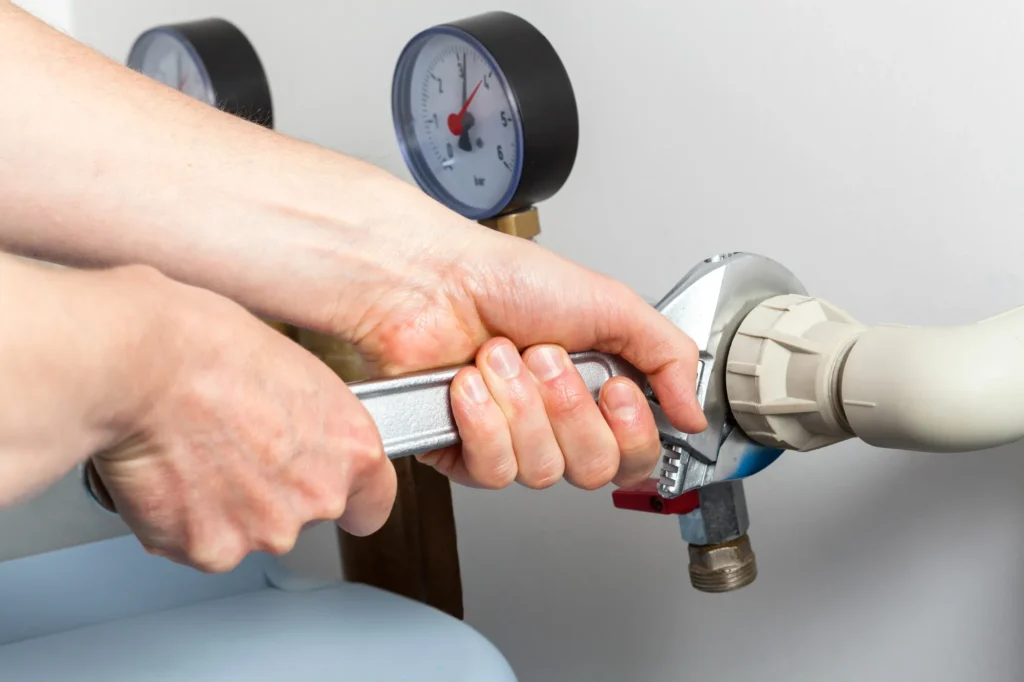
- Air balancing: Technicians provide HVAC airflow balancing by measuring duct pressure and airflow and adjusting dampers and registers to equalize temperatures.
- Duct cleaning and repair: HVAC technicians use specialized cleaning methods, remove contaminants, clear blockages, and repair ductwork damage to restore proper circulation.
- Ductless mini-splits: Ductless mini-split installations cool rooms directly, and they can supplement an existing central AC in areas that are further away from the main unit.
- Insulation upgrades: Adding insulation strengthens the thermal barrier against outdoor heat to optimize efficiency and reduce conditioned air loss.
- Zoning systems: Technicians install motorized dampers and multiple thermostats to divide your home into independently controlled zones.
- Air sealing: Weatherstripping, foam, and other solutions minimize cracks and leaks in the building envelope.
How a Home Energy Assessment Can Identify Hidden Issues
A home energy assessment specifically looks for structural or mechanical issues that may contribute to inefficient HVAC operation and uneven comfort. A home energy audit considers your entire home’s thermal envelope as a single system to pinpoint the root cause rather than just treating symptoms through oversized AC replacements or unnecessary upgrades. Technicians use technology and methods such as:
- Thermal imaging to evaluate insulation
- Ductwork inspection
- Static pressure analysis
- Blower door test
- Assessing the overall home’s thermal envelope
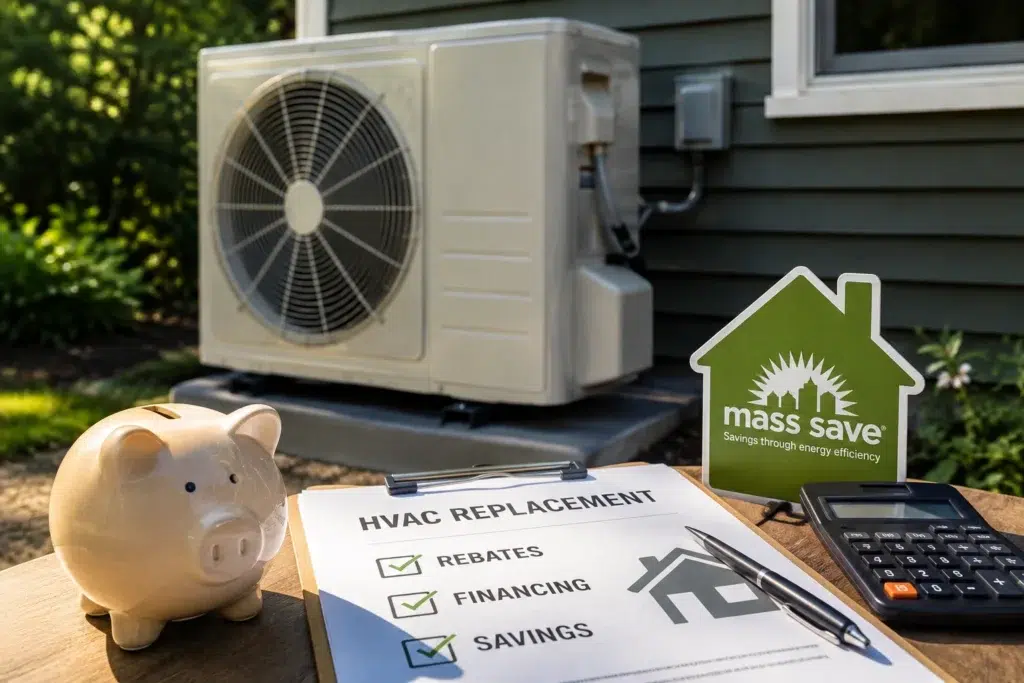
At Endless Energy, we provide no-cost energy assessments for eligible heating or cooling system upgrades. Based on our findings, we provide tailored recommendations to optimize your home’s thermal envelope. Qualifying homeowners can earn potential savings through rebates on heat pumps, water heaters, and other energy-efficient systems. We also offer insulation and weatherization services to help reduce energy costs, improve indoor comfort, and boost overall efficiency.
Optimize Your Comfort With Endless Energy AC Services
If you consistently experience hot spots in your house, don’t keep turning the thermostat down — rely on an HVAC technician from Endless Energy. Our team can assess your home’s airflow and energy efficiency to determine a personalized solution for even comfort, whether ductless mini-splits for hot rooms or insulation upgrades. Contact us today to schedule AC repairs, maintenance, or installation services.