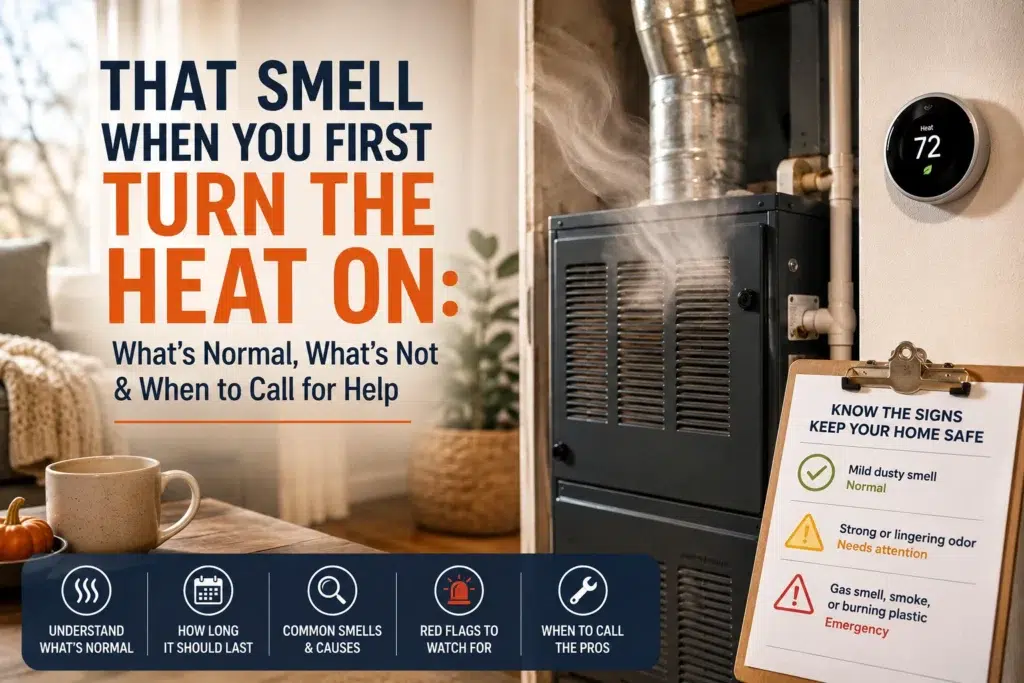

The winters in Massachusetts always come with new surprises. And it’s often related to your heating system. To survive the freezing breeze in Massachusetts, residents usually rely heavily on their heating units, which puts an extra burden on their efficiency. This additional strain can sometimes cause sudden malfunctions that need to be addressed immediately, resulting in an emergency call to heating services in Massachusetts.
Most residents in Massachusetts often face issues like furnace breakdowns, thermostat malfunctions, and many more during winter. Understanding the most common heating issues and how to address them can help homeowners prepare for the unexpected. Let’s discuss them one by one!
Table of Contents
ToggleEmergency Problems Where You Must Call Heating Services In Massachusetts
From no heat from the vents to strange noises from the unit and high energy bills, all these problems result in extreme frustration and costly repairs. To avoid them, you need to know common problems so you can fix them quickly. The most prominent emergency heating system problems are as follows.1. Poor Airflow or No Heat From Vents
One of the most frequent complaints homeowners experience is a lack of airflow or no heat coming from the vents. This issue can stem from several underlying causes, such as clogged or leaking ducts, dirty filters, or a malfunctioning blower motor. If your heating system isn’t pushing warm air through your home, consider checking for these potential problems:- Clogged or Leaking Ducts: When ducts become blocked or leak, warm air may not reach the desired areas of the home.
- Dirty or Broken Blower Motor: A malfunctioning blower motor can prevent air from circulating properly.
- Obstructed Air Returns: If air returns are blocked or dirty, it can interfere with the heating system’s airflow.
2. Faulty or Unresponsive Thermostat
Your thermostat is the brain of your heating system, controlling temperature regulation. If it malfunctions or becomes unresponsive, your home might not reach the desired temperature. Some signs of thermostat problems include:- Blank Screen: If the thermostat’s display is blank, check the power source and ensure the system is properly turned on.
- No Power: Electrical issues, dead batteries, or faulty connections can result in a non-functional thermostat.
- Outdated Thermostat: Older thermostats might struggle to communicate with modern systems, necessitating replacement.
3. Boiler or Furnace Breakdown
Furnace and boiler breakdowns are some of the most serious heating issues homeowners can face. These breakdowns often happen suddenly, especially during peak winter months. Common causes for furnace or boiler failure include:- Old Age and Wear: Heating systems that are more than 15-20 years old may begin to malfunction due to wear and tear.
- Lack of Maintenance: Failure to schedule regular maintenance can lead to costly repairs. Dirty filters, worn-out parts, and neglected components can all contribute to a system failure.
- Faulty Parts: Broken thermostats, igniters, or faulty gas valves may prevent your furnace or boiler from operating.
4. Noisy Heating System
If your heating unit starts making strange noises, it may indicate an underlying issue. Common sounds and their potential causes include:- Rattling or Banging Noises: Often caused by loose parts, the build-up of dirt, or malfunctioning blower fans.
- Hissing or Whistling Noises: Usually the result of air in the system or blocked vents.
- Squealing Noises: Caused by worn-out belts or malfunctioning fan motors.
5. Frequent System Short Cycling
Short cycling occurs when the heating system turns on and off more frequently than normal, often running for only a few minutes at a time. This issue can result in increased energy consumption and decreased system lifespan. Common causes of short cycling include:- Dirty Air Filters: When air filters are clogged, the system struggles to get enough airflow, causing it to shut down prematurely.
- Faulty Flame Sensor: A malfunctioning flame sensor can cause the system to think it’s malfunctioning and shut down.
- Thermostat Issues: Incorrect thermostat settings or placement can contribute to the short cycling problem.
6. Cold Spots in Your Home
Unexplained cold spots in your home can be frustrating, especially when your heating system is running. Several factors contribute to cold spots, including:- Improperly Sized Heating System: If the system is too small or not designed for your home’s layout, certain areas may not receive adequate heating.
- Leaky Ducts: Ductwork leaks can cause heat to escape before reaching certain rooms, leaving some areas colder than others.
- Blocked Vents or Dampers: If vents or dampers are closed or obstructed, they can prevent warm air from circulating properly.
7. Rising Heating Bills
If you notice a sudden surge in your electricity bills, it may indicate a problem with your heating system’s efficiency. Several factors can contribute to rising heating costs:- Ductwork Leaks: Leaking ducts can waste heated air, increasing energy consumption.
- Dirty Filters or Coils: Clogged filters or dirty coils force the unit to work harder, using more energy.
- Old or Inefficient Systems: Older systems may be less energy-efficient, leading to higher bills.
- Poor Insulation: Insufficient insulation can result in heat loss, causing the system to run longer to maintain the desired temperature.
8. Frequent Repairs and System Failures
If your heating system requires repairs after a short time, it may be time to replace it altogether. Some reasons for constant breakdowns include:- Age of the System: Older systems are more prone to breakdowns and inefficiency.
- Lack of Maintenance: Without regular maintenance, parts can wear out faster and cause frequent failures.
- Undiagnosed Issues: Continuing to run a system with unresolved issues can lead to frequent breakdowns.