
Many Massachusetts homeowners use gas or electric furnaces as their primary home heating system. Because of our extremely cold, wet, and windy winters, a reliable furnace that provides consistent comfort when temperatures drop is vital. One common issue homeowners face is a furnace that starts turning on and off every few minutes.
You may wonder why this happens and how to prevent it. The pros at Endless Energy Home Services have some helpful tips and information regarding this all-too-common, frustrating furnace problem.
Table of Contents
ToggleWhat Is Furnace Short Cycling?
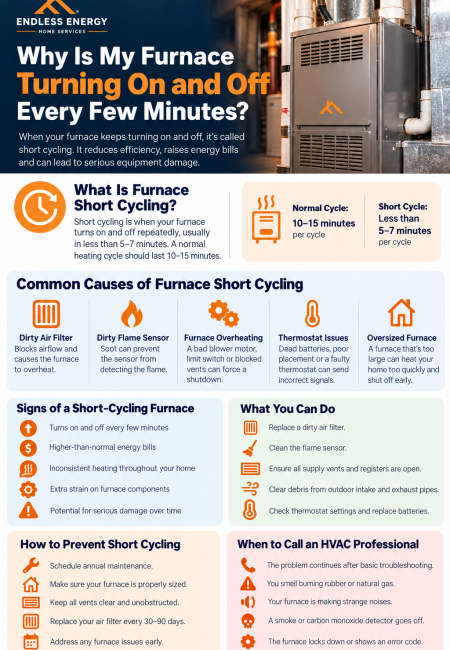
When your furnace keeps turning on and off in your Massachusetts home, it’s short-cycling, which reduces its energy efficiency and performance over time. A typical furnace heating cycle should last 10 to 15 minutes, but when it short-cycles, that cycle drops to just under five to seven minutes. The furnace keeps turning on and off repeatedly, long before it heats your home to the pre-set temperature.
As the furnace keeps turning on and off every few minutes, it uses much more energy than normal to heat your home, reducing efficiency and raising energy bills. It can also lead to inadequate heating, since the furnace doesn’t have enough time to heat your living space before it shuts off again. Short cycling also puts excess strain on important furnace components, leading to premature breakdowns that could require major repairs or a full replacement because it shortens your equipment’s lifespan.
Why Does My Furnace Keep Turning On and Off?
If you’re wondering why does my furnace keep turning off and then back on, this problem may take place for several reasons. Here are some of the most common furnace short-cycling causes and why they occur:
- A dirty air filter: When your furnace air filter is extremely dirty or blocked, it impedes airflow, traps heat inside your furnace, and forces the safety switch to shut the equipment down.
- Dirty flame sensor: In a natural gas furnace, soot can cover the flame sensor and prevent it from detecting the burner flame, causing it to light for a few seconds and then shut off.
- Furnace overheating: A broken blower motor, a bad limit switch, or blocked supply vents can force the furnace to shut off because the internal heat exchanger overheats.
- Thermostat issues: Dead batteries, poor placement, or a broken unit can send incorrect temperature readings to the furnace, causing constant short cycling until you fix it.
- Oversized furnace: If your current equipment is too large for your home, it may heat up your living space too quickly, which causes the furnace to start, then shut off long before it completes a full, efficient heating cycle.
Is It Normal for a Furnace to Turn On and Off Frequently?
A furnace cycling on and off frequently is not normal and can lead to several issues. When your furnace keeps turning on and off rapidly, it puts extra strain on key components like the blower motor, control board, and igniter, which can lead to premature failure and require professional repairs or a full furnace replacement. If the furnace overheats, it could crack the heat exchanger and cause a potentially dangerous carbon monoxide leak. When your furnace keeps short cycling, it also uses more fuel or electricity than normal, which can lead to skyrocketing energy bills.
What to Do if Your Furnace Is Short Cycling
You can do a few things yourself if your furnace is short cycling. Here’s what to do and how to fix furnace short cycling if this issue happens:
- Inspect your air filter, and if it’s dirty or clogged, replace it, as this is the most common cause of short cycling.
- Turn off the power to your furnace at the breaker and main switch, locate the front service panel, find the flame sensor, and gently clean it with steel wool until it shines to remove excess soot or dust.
- Check all your registers to confirm they’re open, and remove obstructions like area rugs and furniture from air vents.
- Inspect the outdoor intake pipes and exhaust flue and remove leaves, snow, animal nests, or other debris.
- Make sure your thermostat is set to “Heat” and set higher than the current room temperature, replace the batteries (if applicable), and confirm it’s not placed near a drafty area or in the path of direct sunlight.
Can Short Cycling Damage Your Furnace?
When your heater keeps turning on and off, it can cause significant damage that almost always requires repair or full furnace replacement. Whenever your furnace turns on, the inducer spins, the igniter fires, and the blower motor draws the most current. If the furnace shuts off after a few minutes and then turns on again too often during the day and night, it wears out these components and can lead to a major breakdown.
If short cycling occurs because of overheating from blocked vents or a clogged air filter, those extreme temperature swings put heavy stress on the heat exchanger. This can cause cracks or even a serious carbon monoxide leak that requires emergency repairs. A dirty flame sensor that causes short cycling can also overwork your gas furnace’s safety lockouts and gas valve over time.
When to Call an HVAC Professional
If your furnace keeps short-cycling, here’s when you should contact an experienced HVAC professional for help:
- You changed the air filter, confirmed the vents are clear, and verified the thermostat is working correctly, but the problem persists.
- You smell burning rubber or rotten eggs (natural gas) coming from the furnace and into your living space (also contact your local fire department to report a possible emergency).
- Your furnace is making strange banging, rattling, screeching, or booming noises.
- If your smoke detector or carbon monoxide detector goes off and you can’t immediately identify the cause, call the proper authorities and then an HVAC professional.
- Your furnace tries to light, then locks down (hard lockout) for about an hour and flashes an error code light.
How to Prevent Furnace Short Cycling
While you can’t always prevent furnace short cycling from occurring, there are some things you can do to try and keep this common issue from happening to you:
- Schedule routine preventative maintenance once a year that includes a comprehensive inspection, cleaning, and furnace tune-up.
- Make sure that your existing furnace is appropriately sized for your home and household needs.
- Before winter arrives, make sure that all of your vents are clear and free of obstructions.
- Regularly inspect your furnace to verify that the flame sensor and air filter are clean and free of debris.
- Replace your air filter every 30 to 90 days, or earlier if it becomes clogged or dirty.
- If you notice an issue with your furnace, schedule professional heating services right away to prevent the problem from getting worse.
Contact Endless Energy for Furnace Help Today
Endless Energy Home Services is a trusted furnace resource for Massachusetts homeowners, offering professional services, flexible financing options, special offers and discounts, and help with energy rebates and incentives. To learn more or schedule service, contact us today!
Frequently Asked Questions
How often should a furnace cycle normally?
Under normal circumstances, a furnace should cycle between three and eight times per hour, and each cycle should last between 10 and 15 minutes. If your furnace cycles more often than this, or if the heating cycles last less than five to seven minutes, the equipment is short cycling and needs attention.
Is furnace short cycling dangerous?
Furnace short cycling isn’t always dangerous, but it can lead to total system failure. When a furnace short-cycles because it overheats, it can crack the heat exchanger, potentially causing a dangerous carbon monoxide leak.
What are the most common causes of furnace short cycling?
Some of the most common causes of furnace short cycling include a blocked air filter, a dirty flame sensor, and blocked vents and registers. Other common causes include incorrect thermostat settings, improper furnace sizing, and obstructed intake or exhaust pipes.