
Choosing the right ductless mini splits for a Massachusetts home isn’t just about brand — it’s about performance in freezing temperatures, long-term reliability, and maximizing available rebates.
With rising energy costs and harsh winters, more homeowners are turning to mini split heat pumps in Massachusetts as a highly efficient way to heat and cool their homes year-round. But not all systems are built for New England weather.
If you’re comparing ductless mini split brands, this guide breaks down the best options, what features matter most, and how to choose the right system for your Massachusetts home.
Table of Contents
ToggleWhat Makes a Mini Split Brand Good for Massachusetts Homes?
The best ductless mini split brand for Massachusetts needs to handle more than just cooling — it must deliver reliable heat in sub-freezing conditions. A strong brand is one that performs well in ideal conditions and during the coldest days of winter.
Why Cold Climate Performance Matters
Not all heating systems are designed to maintain efficiency and output as temperatures drop. For homeowners evaluating long-term heating solutions, choosing a system that can deliver consistent heat in extreme conditions will directly impact the system’s long term reliability, as well as your comfort and energy costs.
How mini splits perform during massachusetts winters
Massachusetts winters often bring temperatures well below freezing. Standard heat pumps can lose efficiency in these conditions, but cold climate mini split systems are specifically designed to maintain performance.
These systems continue heating at 5°F or lower, maintain indoor comfort without backup heat, and can help you avoid major efficiency drops in winter.
Hyper-heat technology explained
Many leading brands offer hyper heat mini splits, which use advanced inverter-driven compressors to produce heat even in extreme cold. High-quality cold-climate mini split systems are designed to operate well below 0°F, making them a reliable primary heating source in Massachusetts. Top brands include Mitsubishi, Fujitsu, Daikin, Bosch, and LG.
Mitsubishi Electric Mini Splits
Mitsubishi mini splits are widely regarded as the most reliable option, especially for cold climates like Massachusetts, thanks to their consistent performance in sub-zero temperatures, and long lifespan of 15 to 20 years. They’re great for homeowners looking for the best mini split for cold weather and long-term performance, who are prioritizing durability, efficiency, and dependable year-round comfort.
Their key strengths include:
- Industry-leading Hyper-Heating (H2i®) technology
- Reliable heating in sub-zero temperatures
- Extremely quiet operation
- Long track record of durability
Fujitsu Mini Splits
Fujitsu mini splits offer an excellent balance between performance and cost. These units are often chosen by homeowners who want reliable performance without paying a premium. The key strengths of the Fujitsu include:
- Strong cold-climate models (XLTH series)
- High efficiency ratings
- Competitive pricing
Daikin Mini Splits
Daikin mini splits are known for innovation and global reliability. Homeowners looking for a well-rounded option choose the Daikin because they offer:
- Advanced inverter technology
- Solid warranty coverage
- Good cold-weather performance
Bosch Mini Split Systems
Bosch systems are a growing option in the United States. They appeal to budget-conscious homeowners seeking dependable heating and cooling. They offer:
- Good efficiency ratings
- More affordable upfront cost
- Reliable performance in moderate cold
LG Ductless Mini Splits
LG mini splits combine performance with modern design and are sought after by tech-focused homeowners. The key strengths of the LG include:
- Sleek indoor units
- Smart home integration
- Strong cooling and good heating performance
Comparing Mini Split Brands: What Homeowners Should Look For
Mitsubishi, Fujitsu, and Daikin are all top-tier ductless mini split brands, but they differ in ways that can impact performance in Massachusetts homes.
While each brand has its strengths, the right choice ultimately depends on how well the system fits your home and heating needs. When evaluating mini split brands, focus on the factors that directly impact performance and long-term cost:
- Warranty coverage
- Availability of parts and service
- Installer expertise
- Proven cold-climate performance
- High efficiency ratings (SEER2 and HSPF2)
- Long lifespan (15 to 20 years)
- Compatibility with Mass Save® rebates
SEER2 and HSPF2 ratings
Higher ratings mean better efficiency and lower energy bills. When evaluating mini splits, you’ll want to look for the following ratings:
- SEER2: At least 16 (20+ is ideal)
- HSPF2: 9 or higher for cold climates
Single-Zone vs Multi-Zone Mini Splits
Both single-zone and multi-zone ductless mini splits are highly energy efficient mini split systems, especially compared to traditional heating and cooling systems.
Single-zone systems
Designed to heat or cool one specific area, like a bedroom, office, or finished basement, single-zone systems are a great option for homes where certain rooms are harder to keep comfortable year-round.
Multi-zone systems
These systems connect multiple indoor units to a single outdoor condenser, with each indoor unit operating as its own zone. This allows you to heat and cool several rooms, or the entire home, while benefiting from lower energy costs and improved comfort control.
This zoning capability is especially valuable in Massachusetts, where temperature needs can vary between floors, older additions, or poorly insulated areas.
Best Mini Split Features for Massachusetts Homes
Massachusetts homes, especially older New England properties, come with unique challenges like poor insulation, no existing ductwork, and wide seasonal temperature swings.
The right mini split system should be equipped with features that address these conditions directly:
- Cold climate (hyper-heat) capability: To maintain heating performance during freezing winters.
- Variable-speed inverter technology: To adjust output and maintain consistent indoor comfort.
- High HSPF2 ratings: For efficient heating during long winter seasons.
- Compact indoor units: That can be installed without major structural changes.
- Zoning capabilities: To heat specific rooms without wasting energy.
These features make ductless systems ideal for historic homes and retrofits where adding ductwork isn’t practical.
Mini splits for finished basements and additions
For basements, additions, and converted spaces, the focus should be on flexibility and moisture control.
The best systems offer:
- Dedicated zone control: For hard-to-condition spaces.
- Built-in dehumidification modes: For damp basements common in Massachusetts.
- Flexible installation options: For tight or unconventional layouts.
These features allow mini splits to deliver targeted comfort without overloading your main HVAC system or requiring costly upgrades.
How Mass Save® Rebates Affect Your Mini Split Choice
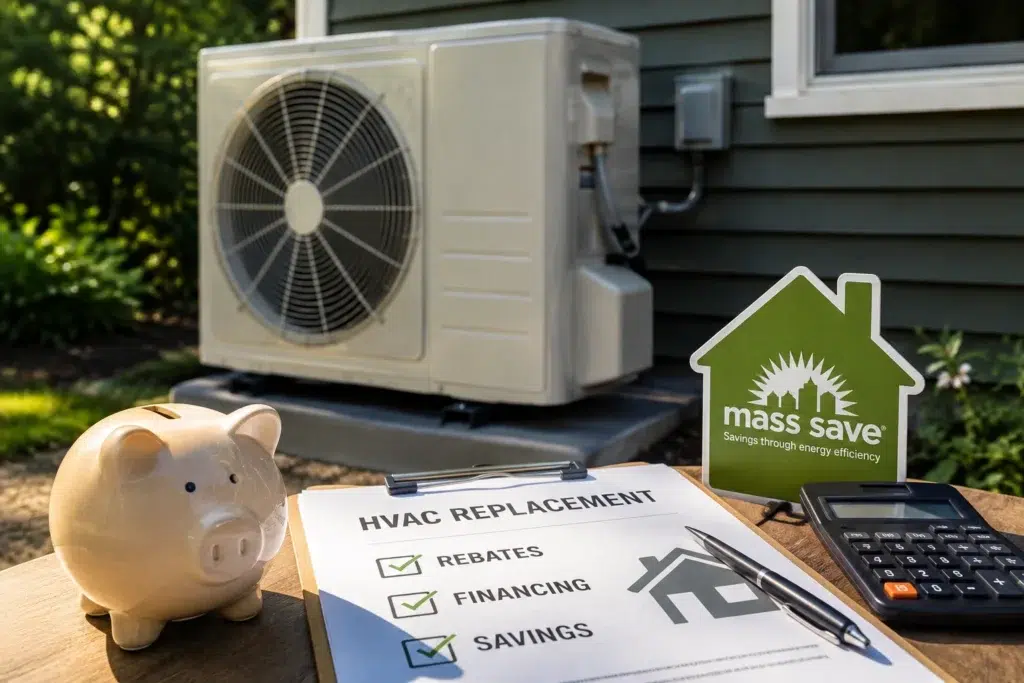
One of the biggest advantages of installing mini split heat pumps in Massachusetts is access to rebates through Mass Save®. These incentives are designed to encourage high-efficiency upgrades and can significantly reduce upfront costs, especially for cold-climate systems.
Rebates and financing options
Homeowners may qualify for:
- Thousands of dollars in rebates for eligible mini split installations.
- Additional incentives for whole-home heat pump systems.
- Bonus savings when combined with insulation or energy upgrades.
- Low-interest or no-interest financing options to spread out costs over time.
In many cases, these programs make it possible to install a higher-quality system, like a cold climate mini split, at a much lower out-of-pocket cost. Working with a knowledgeable local installer like Endless Energy can help you maximize all available rebates and financing options while choosing a system that qualifies.
Choosing the Right Mini Split Installer Matters Too
Even the most reliable mini split brands won’t perform properly without expert installation. A qualified installer will:
- Properly size your system
- Ensure correct placement of indoor and outdoor units
- Optimize airflow and efficiency
- Help you qualify for rebates
Incorrect sizing or poor installation is one of the most common reasons homeowners experience performance issues. Mini split size is based on factors like square footage, insulation, ceiling height, and window exposure.
- If a system is too small, it will struggle to heat or cool effectively.
- If it’s too large, it may short cycle, reducing efficiency and comfort.
Why Massachusetts Homeowners Choose Endless Energy
When it comes to Massachusetts mini split installation, local expertise makes a major difference. A professional home energy assessment is often the first step, identifying how your home uses and loses energy so the system can be properly sized and designed for maximum efficiency.
Endless Energy provides full-service HVAC solutions, including installation, maintenance, and system upgrades helping homeowners get the right heating and cooling setup for their home.
At Endless Energy we help homeowners:
- Choose the best system for their home layout.
- Maximize Mass Save® rebates.
- Find the best financing options available.
- Install cold-climate systems designed for New England.
- Improve overall home energy efficiency.
Our team understands the challenges of Massachusetts homes, from older construction, to extreme seasonal swings.
Contact us today for proper design, installation, and rebate guidance to make sure your system performs efficiently, reliably, and cost-effectively for years to come.